How a Builder Reads a Pool Cage: Footer, Frame, Screen, Fasteners
Walk around any older pool cage in Port Charlotte. You'll likely see the same wear. It starts small, near the ground. That's because the footer and frame take the brunt of Florida's weather. Sun, rain, salt air off Charlotte Harbor, constant humidity. It all pushes against aluminum and concrete year after year.
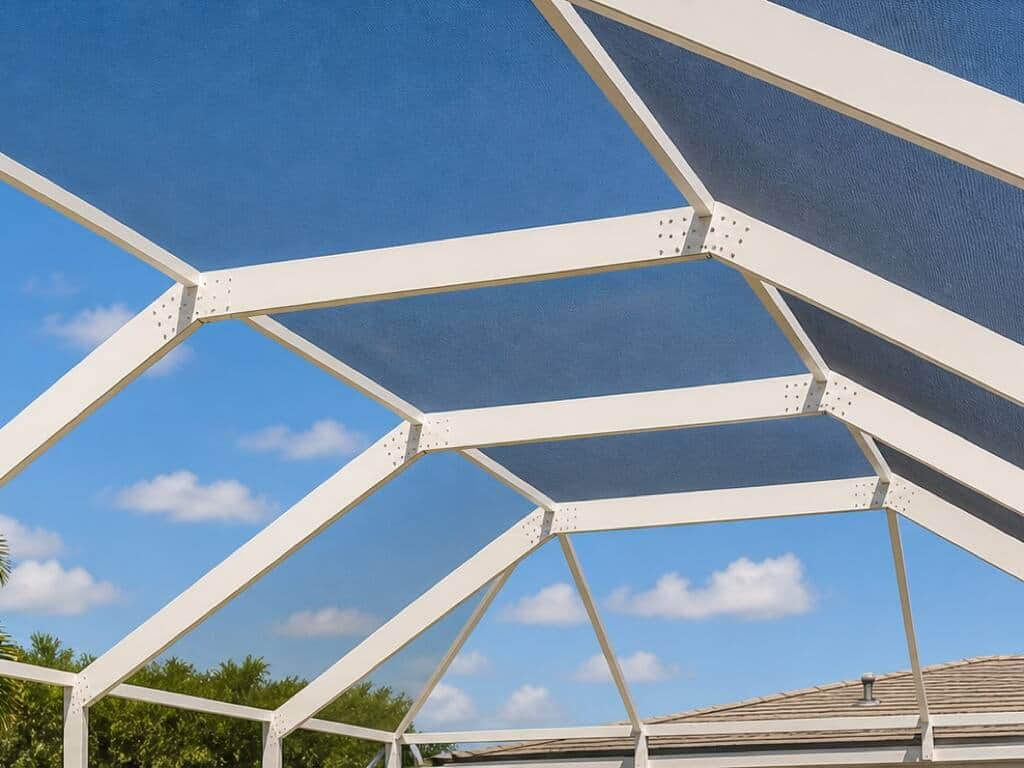
• Footer: the concrete where each post meets the deck. Look for cracks, spalling, or a post that wobbles. These are big red flags.
• Frame: the aluminum posts and beams. We check for corrosion, bent pieces from storms, or joints that don't sit tight anymore.
• Screen: the mesh panels. Small tears near the corners are common. Widespread brittleness across every panel is a different story.
• Fasteners: the screws, clips, and spline. They fail one at a time, until a big gust takes out a whole panel.
Here's what most homeowners don't realize until we do an inspection: these four areas don't fail at the same time. A cage can have a solid frame. But a shot footer. Or tight fasteners holding onto screen that's basically tissue paper at this point. So a builder has to look at each piece on its own. We don't just eyeball the whole thing and guess.
We've walked cages where the frame looked rough on the surface. Chalky and dull. But every joint was still structurally sound. And we've seen the opposite. Clean-looking aluminum with a footer that had separated from the slab underneath. You can't tell that from the driveway, honestly.
Fasteners deserve their own mention. Screws and clips in coastal Southwest Florida corrode faster than most people expect. Especially on the side of the cage that faces prevailing wind and salt spray. A few loose fasteners don't mean replacement. But if we find corrosion at most connection points, that's a sign. The whole fastening system is near the end, not just a handful of screws.
So how does this add up to a repair-or-replace answer? It comes down to which areas are failing. And how many at once.
Repair or Replace: A Scenario-Based Decision Guide
No two pool cages age the same way. Salt air near Charlotte Harbor eats aluminum faster than further inland, for example. A storm can wreck one panel and leave the frame untouched. Or it can twist the whole structure without breaking a single screen. So the real question isn't age alone. It's what a builder finds when they look at the frame, the footers, and the fasteners.
Here are some common situations homeowners in Punta Gorda and Port Charlotte run into. This is how a builder usually sorts them.
• One panel blew out in a storm. The rest of the frame is straight. The footers are solid. This usually points to a targeted repair.
• Multiple panels are loose. Screws are stripped. You can wiggle the frame at more than one joint. That widespread weakness usually means replacement makes more sense than chasing repairs one section at a time.
• You're adding a pool, extending the lanai, or building a new outdoor living space. This isn't a repair question at all. It's new construction. And it needs its own permit and design.
• The enclosure was built before recent wind code updates in Charlotte County. Even if it looks fine, a builder will check wind load requirements before recommending repair.
• Footers are cracked or corroded at the base. This is a structural issue, not cosmetic. It almost always shifts the decision toward replacement.
That third scenario trips people up. Homeowners call asking about pool cage repair when they really need a new enclosure built. One that matches a new pool or an expanded lanai. Different project, different permit, different scope entirely.
We've seen homeowners try to patch a frame that was already failing at the base. Only to have the same section fail again a year later. That's the risk with quick fixes on structural problems.
So how do you know which scenario you're in? Start with a simple walk-around. Look at the footers where the frame meets the concrete deck. Check for rust streaks, cracked concrete, or gaps under the frame. Push gently on a few panels. Do they flex more than you'd expect? None of this replaces a real inspection, but it gives you a starting picture.
Pool cage repair or full replacement in Punta Gorda? It comes down to matching the right fix to the actual damage. Not guessing.
Why a Torn Screen Doesn't Always Mean a Failing Cage
A torn screen looks bad. But it's usually the least serious problem your pool cage can have.
Screen mesh is the skin of the structure, not the skeleton. It tears from tree branches, lawn equipment, storm debris, or just age. The aluminum frame underneath is a different story. That frame holds the whole cage up against wind loads. And it's rated for specific pressures under Florida building code. So a rip in the screen tells you almost nothing about how the frame underneath is doing.
We see this mix-up a lot in Port Charlotte and Punta Gorda after a rough storm season. Homeowners spot a flapping panel of screen and assume the cage is done for. Sometimes it is. But often the frame is sound. Only the mesh needs new material.
Here's what points to a structural problem instead of a simple screen issue:
• Bent, bowed, or leaning support beams, not just loose screen panels
• Corroded or crumbling fasteners where the frame meets the footer or house
• Cracks or separation at the corner joints where beams connect
• Visible gaps between the cage and the house wall or pool deck
• Multiple panels failing at once after wind, not one isolated tear
If what you're looking at matches the first list, you likely need rescreening or a screen repair. Not a full rebuild. If it matches the second, that's a different conversation.
This is where a lot of Punta Gorda homeowners get bad advice. Some screen repair companies will only look at the mesh and miss frame corrosion underneath. And some contractors go the other way. They push a full replacement when a section repair would do the job.
A licensed builder checks both layers before recommending anything.
That means walking the perimeter. Checking fastener condition. And looking at how the beams tie into the house and the deck footers. Age matters too. A cage built before older wind code updates carries different risk than one built more recently. Even if both have torn screens today.
So don't let a torn panel scare you into a bigger decision than you need. And don't assume it's nothing, either. The only way to know for sure is a real inspection of the frame, not just a glance at the mesh.