What Separates a Custom Home From a Production Build
The word 'custom' gets thrown around. Let’s make it clear. A production builder works from a few pre-drawn plans. You pick from maybe six to ten models. Then you choose from a list of finish packages. The lot fits the plan, not the other way around. That works for flat, uniform lots in a big subdivision.
Port Charlotte lots aren't always flat or uniform. Older sections have odd shapes, big trees, and elevation changes from decades ago. A custom build starts with your actual site. It considers the lot's dimensions, drainage, flood zone, and orientation. Then we design the home to fit it. This isn't just about style. It’s how you skip expensive surprises during permitting.
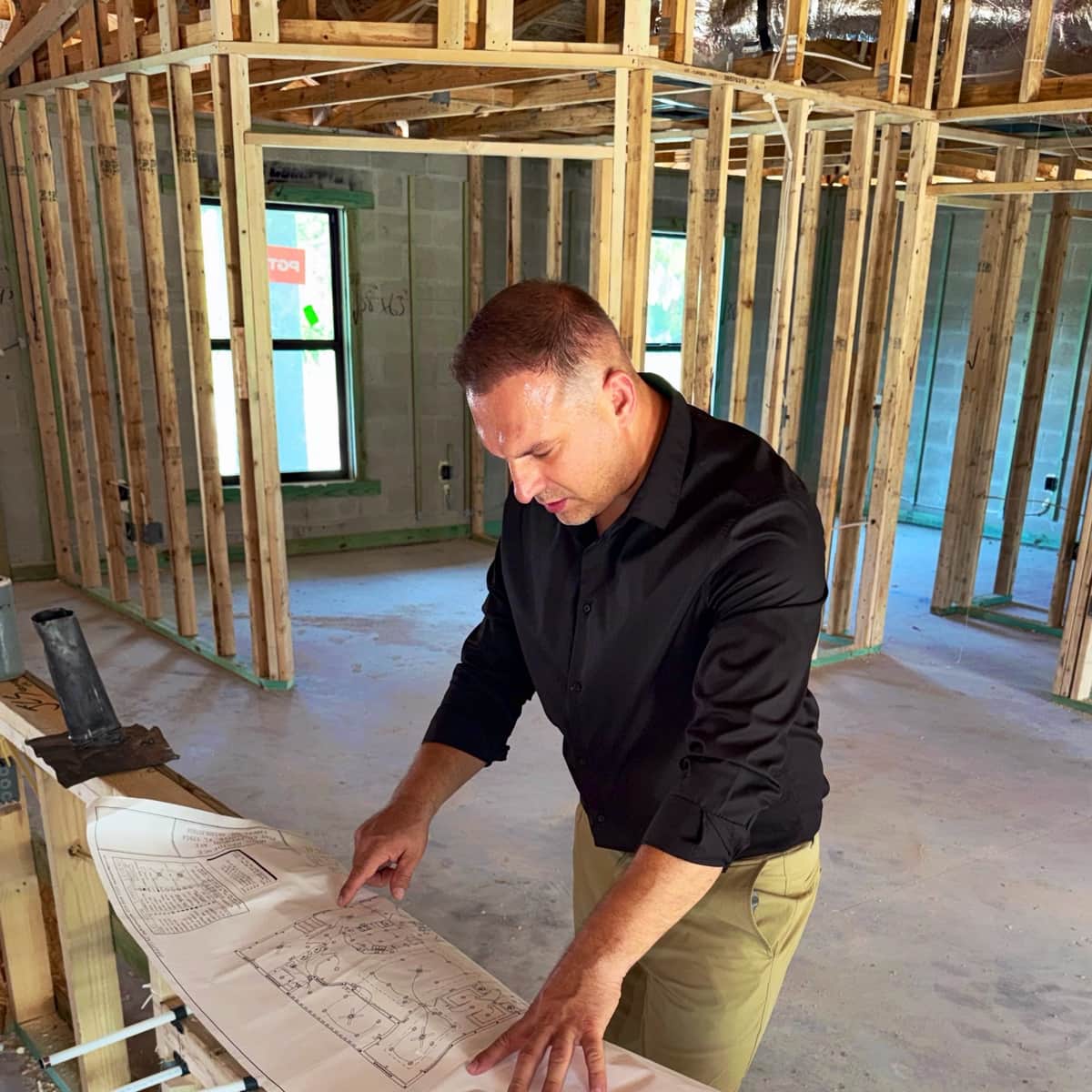
Here's what people often miss until they're halfway through: who’s accountable? With a production builder, your contact often shifts. Sales, then a site supervisor, then a closing coordinator. But with a custom build, under one licensed builder, the same person who checked your clear written scope on day one is still taking your calls at the final walkthrough.
• Plan flexibility: custom lets you make real changes to layout, room count, and structure; production plans are fixed
• Site design: custom plans account for your lot's flood zone, elevation, and wind exposure before drawing
• Material and finish choices: custom lets you pick outside a preset package; production limits you to catalog options
• Communication structure: custom builds usually keep one accountable builder for the whole project
• Permitting approach: custom plans are engineered for your specific address; production plans are pre-engineered for reuse
Say you’re comparing a lot near Midway Boulevard to one closer to the Peace River. Wind exposure and flood elevation rules can differ, even in the same city. Charlotte County's building department checks each address on its own. A production plan built for one part of the county might need engineering changes to work on another lot. A custom scope is written to match the address you own. Not a template.
Neither is automatically better.
Production builders can move faster. Their plans are already engineered. Custom builds trade some speed for a home designed around your actual lot. And your priorities. With us, one licensed builder is responsible for the clear written scope, the permits, and the walkthrough at the end.
Why Your Lot Might Decide the Answer Before You Do
Before you even compare floor plans, look at your lot. The ground itself often makes the choice for you.
Production builders usually work in platted subdivisions. Those lots are already engineered for certain approved plans. If your homesite is in one of those communities, your choices might already be limited to what that builder allows.
Custom builders take on the lots that don't fit a template. Honestly, this is where we shine.
Waterfront parcels along canals, oversized corner lots, and older infill sites near downtown Port Charlotte often need site-specific engineering. This isn't a small thing. It changes your foundation design, your elevation, and sometimes your setback allowances.
• Flood zone designation (X, AE, or VE) affects required elevation and foundation type
• Lot shape and width can limit garage placement, driveway access, and square footage
• Deed restrictions in some Port Charlotte platted communities dictate exterior finishes and roof pitch
• Septic versus sewer availability changes site prep scope and setback rules
• Scrub-jay habitat areas fall under Charlotte County's March 1 through June 30 vegetation-clearing restriction, not a full construction ban
That last point always trips people up. Homeowners often assume nothing can happen on their lot during those months. That’s not quite right. The restriction limits clearing vegetation. It doesn’t stop construction outright. But it does mean your builder needs to sequence site work carefully if your lot is in a mapped habitat area.
So, how do you know which category your lot falls into?
Start with your survey and your flood zone letter from Charlotte County. If your parcel is in a standard subdivision, with a recorded plat and no strange flood designation, a production builder might work fine. If your lot is irregular, waterfront, older, or near a habitat overlay, you’re likely looking at a custom build. That means site-specific engineering and permitting.
One thing is always true. Whoever you hire needs to pull the correct permits for your exact site conditions. Not a generic template.
Design Control, Timeline, and Cost Drivers Compared
With a custom build, you pick the lot, the layout, and almost every finish. A production builder gives you a set list of floor plans and options. That one difference shapes nearly everything else: timeline, cost, and how much say you have once plans go to permitting.
Design control is the clearest difference. A custom build lets you change room sizes, roof pitch, and window placement. All to fit your Port Charlotte lot and its flood zone elevation. A production builder works from a catalog. Changes are limited to pre-set options, like cabinet color or countertop style.
• Site conditions: elevation certificates, soil work, and drainage design vary lot to lot and affect custom projects more directly
• Wind and flood engineering: Florida Building Code wind load and flood elevation requirements apply either way, but custom plans often need site-specific structural review
• Design and engineering fees: custom homes typically involve architect or designer costs that production plans already absorb into their standard offering
• Material selections: custom builds allow open-market sourcing, production builds usually rely on set vendor packages
• Change orders: custom projects can adjust mid-process, which affects schedule and cost more than a locked production plan
Timeline follows the same pattern. Production builders move faster early on. Plans, permits, and material specs are already done. Custom builds need more upfront design and permitting review with Charlotte County Building Construction Services. Every plan is new to their desk, after all.
But faster isn't always better.
Here’s how the two paths usually differ once groundwork starts:
• Custom build: architect or designer drafts plans specific to your lot and elevation
• Custom build: structural engineer reviews wind and flood loads for that exact site
• Custom build: permitting review often takes longer since the plan is unique
• Production build: buyer selects from a pre-engineered plan already permitted in similar form before
• Production build: material orders follow a standard package, which can shorten lead times
• Both paths: final inspections and certificate of occupancy follow the same county process
We see homeowners assume production means simpler, and custom means complicated. That's not quite right. The real question is how much you want to shape the design. Or how comfortable you are choosing from a set list. Either way, one licensed builder should stay accountable. From the first plan review through your final walkthrough.